

The Role of Wildlife in Sustainable Coffee Production
- nouroukili
- Sep 21, 2025
- 4 min read
Coffee is one of the most beloved beverages worldwide, but its production has significant environmental impacts. Sustainable coffee farming practices are essential to protect ecosystems and promote biodiversity. Wildlife plays a crucial role in maintaining the health and productivity of coffee farms. This article explores how wildlife contributes to sustainable coffee production and why supporting wildlife-friendly coffee is vital for the future of the industry.
How Wildlife Enhances Wildlife Coffee Ecosystems
Wildlife contributes to coffee ecosystems in many ways. Birds, insects, and mammals help control pests naturally, reducing the need for harmful pesticides. For example, insectivorous birds feed on coffee pests like the coffee berry borer, which can devastate crops if left unchecked. This natural pest control helps maintain healthy coffee plants and improves yields.
Pollinators such as bees and butterflies are also essential. They assist in the pollination of coffee flowers, which can increase fruit set and quality. Without these pollinators, coffee plants may produce fewer cherries, affecting both quantity and taste.
Additionally, wildlife contributes to soil health. Animals like earthworms and small mammals aerate the soil and help decompose organic matter, enriching the soil with nutrients. Healthy soil supports robust coffee plants that are more resistant to diseases and environmental stress.
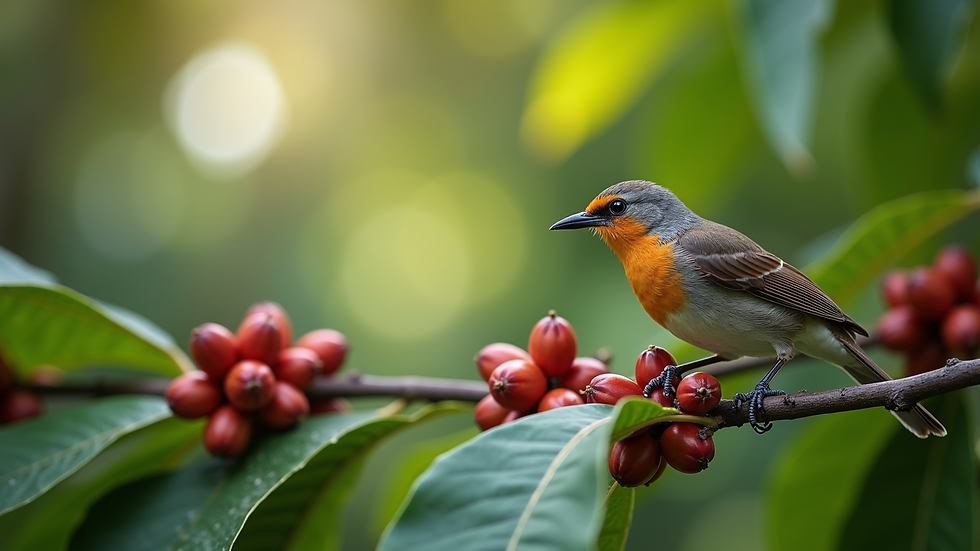
Birds help control pests naturally in coffee farms.
Benefits of Wildlife Coffee Shade and Habitat Preservation
Shade-grown coffee farms provide critical habitats for many wildlife species. Unlike sun-grown coffee, which often involves clearing forests, shade coffee farms maintain tree cover that supports biodiversity. These trees offer shelter and food for birds, mammals, and insects, creating a balanced ecosystem.
Preserving shade trees also benefits coffee plants by regulating temperature and moisture levels. Shade reduces heat stress on coffee plants and helps retain soil moisture, which is especially important in regions facing climate variability.
Farmers who maintain diverse shade trees often see improved coffee quality. The slower maturation of coffee cherries under shade can enhance flavor complexity, making the coffee more desirable in specialty markets.
Supporting shade-grown coffee is a practical way to conserve wildlife habitats while producing high-quality coffee. Consumers can look for certifications that promote these practices, such as the bird friendly certification, which ensures coffee is grown in ways that protect bird habitats and promote biodiversity.

Shade trees provide habitat and improve coffee quality.
Wildlife Coffee Farming Practices That Support Biodiversity
Farmers can adopt several practices to encourage wildlife presence and promote sustainable coffee production:
Maintain native vegetation: Preserving native plants around coffee plots supports local wildlife and provides natural pest control.
Create buffer zones: Establishing buffer zones with natural vegetation around water sources protects aquatic ecosystems and provides corridors for wildlife movement.
Limit chemical use: Reducing or eliminating synthetic pesticides and fertilizers helps protect beneficial insects and soil organisms.
Plant diverse shade trees: Using a variety of native shade trees increases habitat complexity and food sources for wildlife.
Implement agroforestry systems: Integrating coffee with other crops and trees mimics natural ecosystems and enhances biodiversity.
These practices not only benefit wildlife but also improve farm resilience and coffee quality. Farmers who invest in biodiversity often experience fewer pest outbreaks and better soil health, leading to more sustainable yields over time.
Economic and Environmental Impact of Wildlife-Friendly Coffee
Wildlife-friendly coffee production offers both economic and environmental advantages. Environmentally, it helps conserve biodiversity, protect watersheds, and reduce carbon emissions. Shade trees and healthy soils act as carbon sinks, mitigating climate change effects.
Economically, wildlife-friendly coffee can command premium prices in specialty markets. Consumers increasingly seek ethically produced coffee that supports conservation efforts. Certifications like the bird friendly certification provide assurance that coffee is grown sustainably, attracting environmentally conscious buyers.
Farmers benefit from diversified income sources by integrating agroforestry and ecotourism opportunities. For example, birdwatching tours on coffee farms can generate additional revenue while promoting conservation awareness.
Supporting wildlife-friendly coffee production is a win-win for farmers, consumers, and the environment.

Wildlife-friendly coffee farms support biodiversity and local economies.
Encouraging Consumer Support for Wildlife Coffee
Consumers play a vital role in promoting sustainable coffee production. By choosing coffee certified for wildlife-friendly practices, they help create demand for environmentally responsible farming.
Here are some tips for consumers to support wildlife coffee:
Look for certifications such as the bird friendly certification that guarantee wildlife habitat protection.
Buy from brands that prioritize shade-grown and organic coffee.
Support local roasters and cooperatives that work directly with sustainable coffee farmers.
Educate others about the importance of biodiversity in coffee production.
Every purchase can contribute to preserving wildlife habitats and promoting sustainable livelihoods for coffee farmers.
Fostering a Future Where Wildlife and Coffee Thrive Together
The relationship between wildlife and coffee production is essential for sustainability. Protecting wildlife habitats on coffee farms enhances ecosystem services that improve coffee quality and farm resilience. By adopting wildlife-friendly practices and supporting certified coffee, the industry can reduce its environmental footprint and promote biodiversity conservation.
Farmers, consumers, and businesses all have a role to play in fostering a future where wildlife and coffee thrive together. Sustainable coffee production is not just about the beans - it is about nurturing the ecosystems that make great coffee possible.
By valuing wildlife in coffee farming, we ensure that future generations can enjoy both the rich flavors of coffee and the vibrant biodiversity that sustains it.


Comments